Rating:
5/5
Read: 2022-08-20
Review
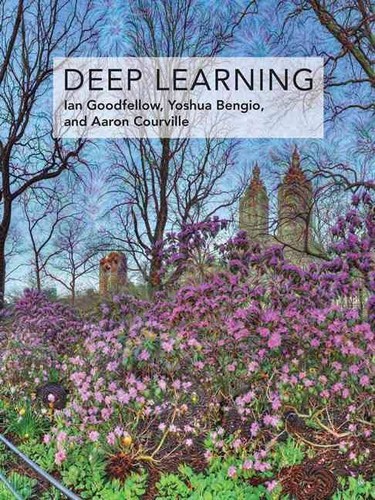
Often referred to as the "Bible of Deep Learning," this textbook covers the mathematical and conceptual foundations of modern AI. It's dense, rigorous, and absolutely essential for researchers.
Summary
The book is divided into three parts:
- Applied Math and Machine Learning Basics: Linear Algebra, Probability, Numerical Computation.
- Deep Networks: Modern Practices: Feedforward Networks, Regularization (Dropout, L1/L2), Optimization (RMSProp, Adam), CNNs, and RNNs.
- Deep Learning Research: Linear Factor Models, Autoencoders, Representation Learning, and Generative Models (GANs).
Key Takeaways
- Regularization is Key: The capacity of neural networks is massive. Without techniques like Dropout, Weight Decay, and Data Augmentation, overfitting is inevitable.
- Optimization Geometry: The landscape of loss functions in high dimensions is complex. Saddle points are surprisingly more common and problematic than local minima.
- Representation Learning: The true power of Deep Learning is its ability to learn a hierarchy of features without manual feature engineering.
"The hierarchy of concepts allows the computer to learn complicated concepts by building them out of simpler ones."